

By Vicki Bemont
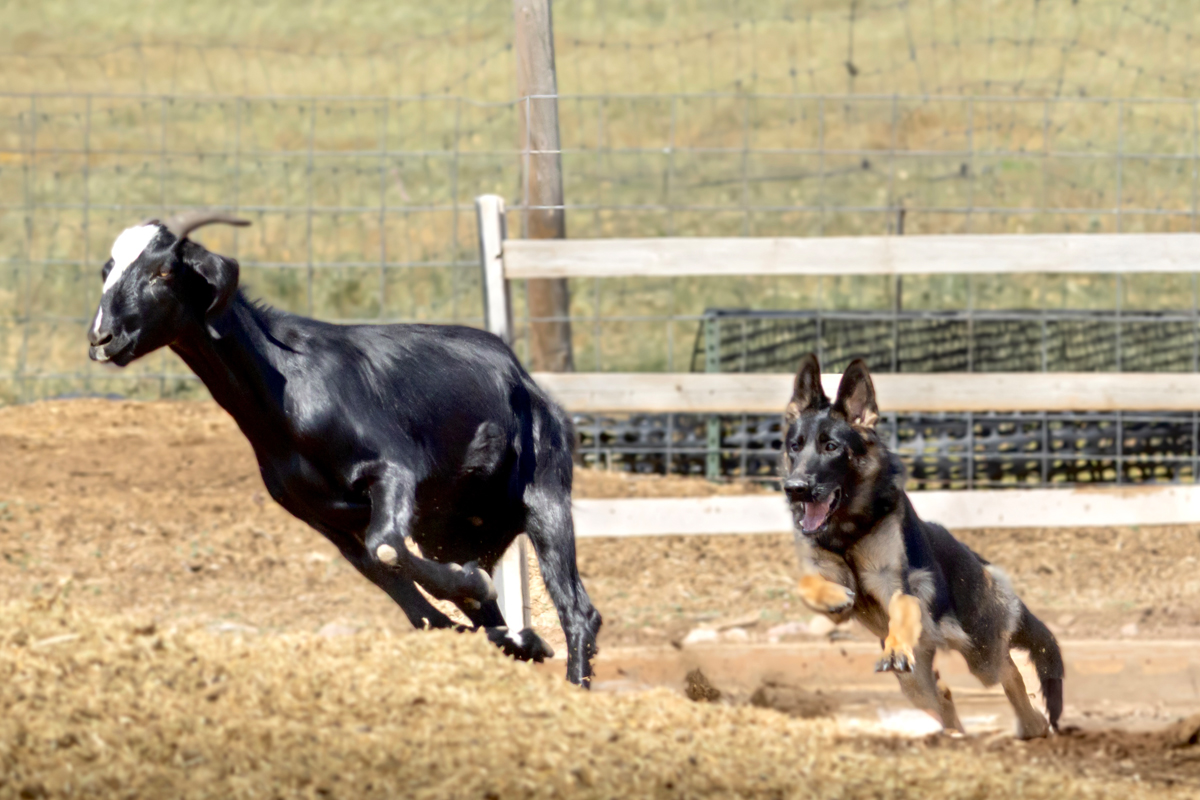
The German Shepherd Dog was originally developed as a dog to be used in tending stock. Unlike many other herding breeds, the shepherd was designed to keep stock in a graze area by patrolling in a steady, quiet manner.
The breed then morphed into a breed prized by the military and law enforcement for a variety of tasks including patrol and detection work.
With the correct nerves and temperament, there is no end to the work or sport in which this breed can excel.
Because German Shepherds were developed for long, tiring tasks, the movement of the dog is critical. The opening statements of the standard are among my personal favorite descriptors of the breed.. Words like strong, full of life, having the appearance of nimbleness are just a few. The German Shepherd should be eager and alert—both fit and willing to serve in many capacities.
A harmonious balanced side gait is then described in detail.The movement should be sound, elastic and smooth. Efficiency and a lack of wasted motion are highlighted as desired.
Somewhere along the way, it became fashionable to show extreme, exaggerated movement in the show ring. There was a trend towards dogs who were overangluated, particularly in hindquarter. Our standard does NOT describe an extreme dog!
Extreme speed should never be used to examine and evaluate the German Shepherd, Extreme speed at the trot has little or no place in the actual tasks the dog performs, If extreme speed is required, the dog gallops full speed to achieve success in his task. The core work of the German Shepherd is done at slow to moderate speeds. Some esteemed members of our fancy describe this as a ”tending” speed. Quite honestly, if a German Shepherd Dog approached a flock of sheep at the extreme speeds we often see in the show ring, it would be a total disaster.
Speed is also a great equalizer. Dogs with improper angulation can often smooth out and look quite exciting. But when moved at a proper speed, they can display all of the unsoundnesses present in over angulated specimens, Common imperfections would be lifting forehands that are quite flashy but that are quite tiring to the dogs. The actual footfall is quite different than the false appearance. Likewise over reaching at extreme speeds in the rear can result in a dog who can disguise the fact that at slower, proper speeds such imperfections as dragging toes or lack of follow through are easily seen. While we do not want to “Fault judge” neither do we want to be deceived into putting up a dog whose movement would hinder his ability to work.
We want a dog who is sound, balanced, elastic, agile and well muscled. They should be able to jump, and turn easily. While they should be able to move soundly at any speed, a pace consistent with tending is the prevailing speed that we should use to evaluate the usefulness of the dog.
In conclusion, our breed should be judged at a slow, working speed. A speed that truly highlights the qualities we so treasure in one of the greatest working breeds ever developed.
Vicki Bemont has been an AKC Judge of German Shepherd Dogs for 40 years. She is a breeder, exhibitor and CGC evaluator. Vicki has titled dogs in Obedience, Agility, Herding, Rally and Schutzhund. Additionally she worked as a SAR handler for many years and trained dogs for HRD, Air Scent, and Water Recovery.
